‘I, for one, welcome our new robot overlords’: online reader comments as a space for public deliberation of Artificial Intelligence (A.I.)
As a part-time PhD student with the School of Communications, Dublin City University, my research encompasses the areas of digital journalism, online audiences, science communication, social network analysis, and public perception of Artificial Intelligence.
Primarily, I am interested in how online audiences of science and technology journalism interact with these stories and with each other as they negotiate meanings around complex topics, AI in particular. My overarching research question is: How do online audiences engage with mediated representations of artificial intelligence?
The main study looks at “story-comment pairs” i.e. stories and their accompanying reader comments gathered from the science and technology sections of the Guardian newspaper. One of the aims is to gauge the extent to which online audiences accept or reject media narratives around artificial intelligence (AI). And on the basis that these commenters are having meaningful conversations about AI, I would also like to explore the possibility of the comment section as a digital public forum for proto-deliberation of science and technology (a place where deliberative discourse occurs). Or perhaps not. It could be the case that most commenters are posting off-topic comments, or arguing with each other in an uncivil fashion, or insulting the journalist or interviewee. Either way, it is interesting to come up with a profile of commenter communities around science and technology. To this end, I am also interested in how these commenters interact with each other: are there clusters of discussions happening at once? Are there community leaders or influential commenters? Do trolls get ignored or do these kinds of communities “feed the trolls”? Do journalists or interviewees wade into the conversation and, if so, are they included or tolerated?
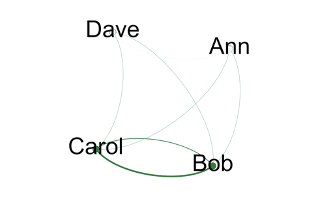
This mixed methods study involves:
- Content analysis (CA) of “story-comment pairs” or stories and their accompanying reader comments to capture – in comparison to themes in the original journalistic piece – newly emerging and/or diverging themes amongst the audience.
- Computer-mediated discourse analysis (CDMA) of reader comments to assess their deliberative qualities. This involves asking, amongst other questions: are they on topic, are they civil, do commenters offer facts or unsubstantiated opinions?
- Social network analysis (SNA) of commenter interactions to understand how these micro-communities form, what actors dominate the conversation, and what kinds of comments get the most feedback or interaction.
- Survey questionnaire of science and technology journalists to gauge their practices and views on reader comments. This will serve to provide context to the preceding analysis.
 Marie Boran | Freelance Writer